

The Evolution of Data Security in the AI Era
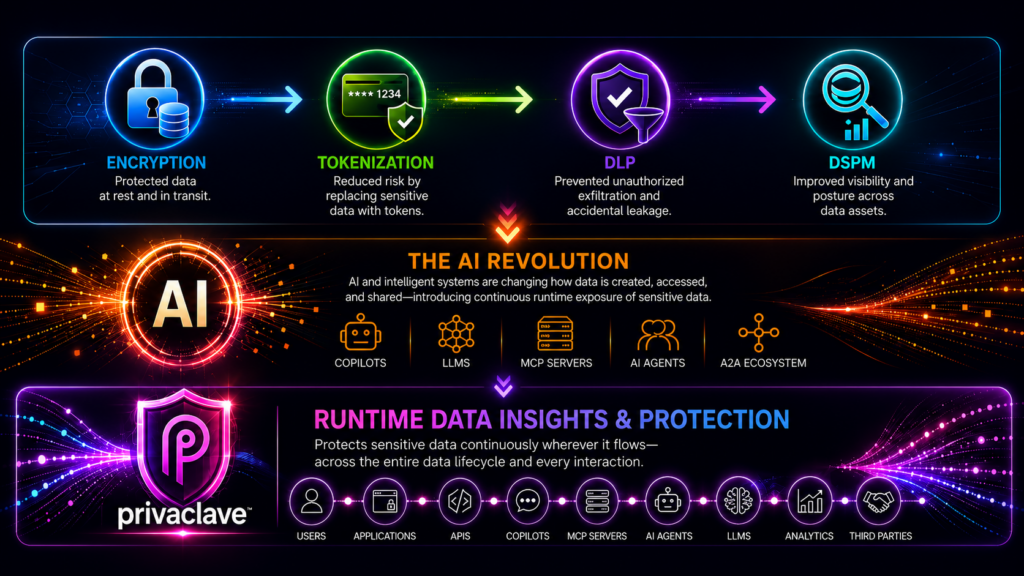
Traditional Security Solved Yesterday's Challenges
Encryption, Tokenization, DLP and DSPM remain critical components of every enterprise security strategy. Each addresses a specific challenge – from protecting stored data and preventing data leakage to discovering sensitive information across the enterprise.
The challenge is that AI changed how data is consumed.
Today, sensitive data flows continuously through applications, APIs, AI copilots, LLMs, MCP servers, AI agents, analytics platforms, and third-party services – creating runtime exposure that traditional technologies were never designed to address.
Lets take a look at what enterprises typically rely on when it comes to protecting data and preventing data breaches.
1. Encryption - Protects data at rest and in transit

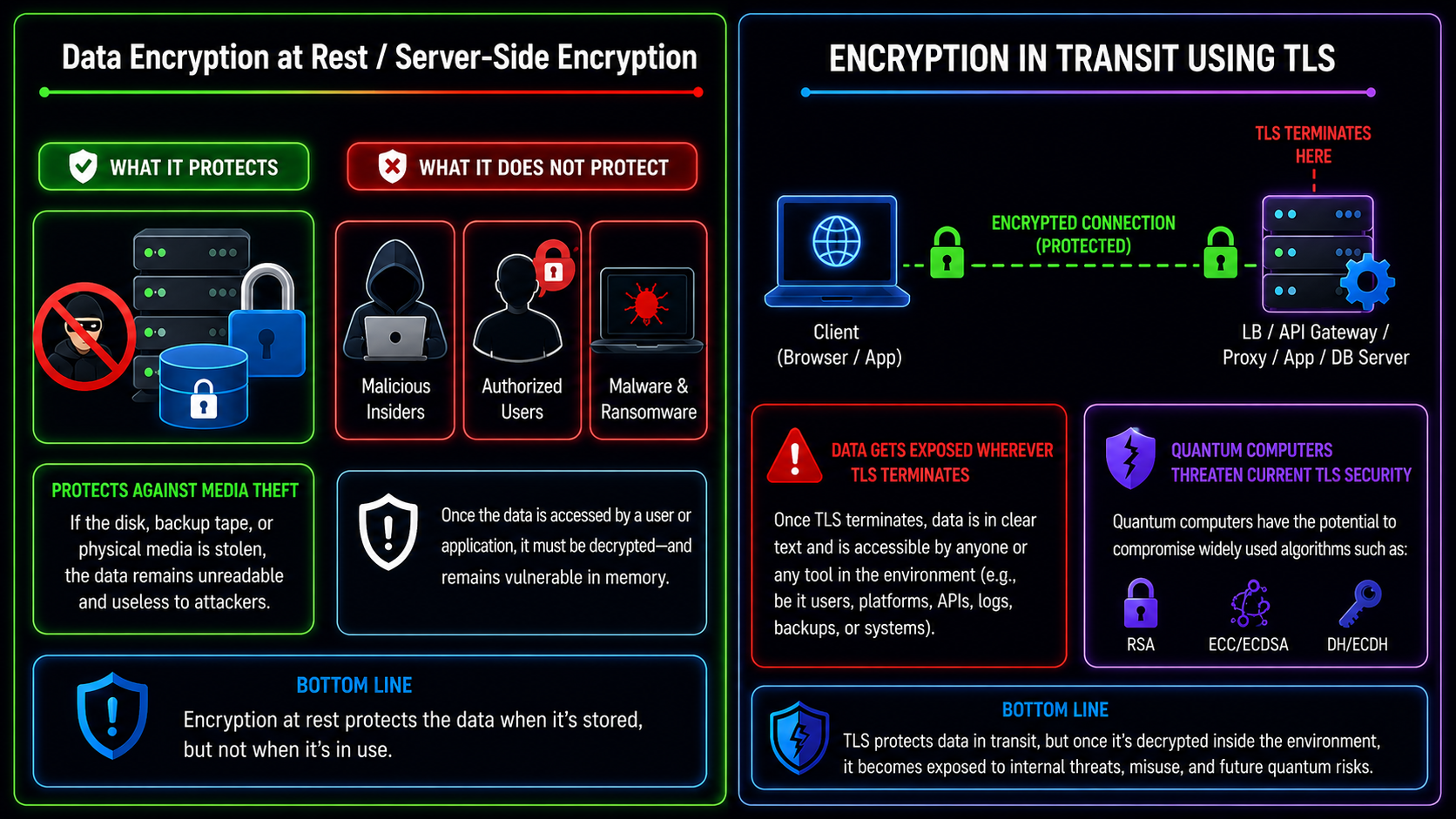
Ideal for databases, storage systems, backups and network communications.
Designed for:
✔ Confidentiality of data at rest and transit
✔ Preventing Man-in-the-Middle (MITM) attacks – Although at risk with Harvest Now, Decrypt Later (HNDL) in the post quantum era.
✔ Compliance
✔ Secure storage – Preventing against media theft.
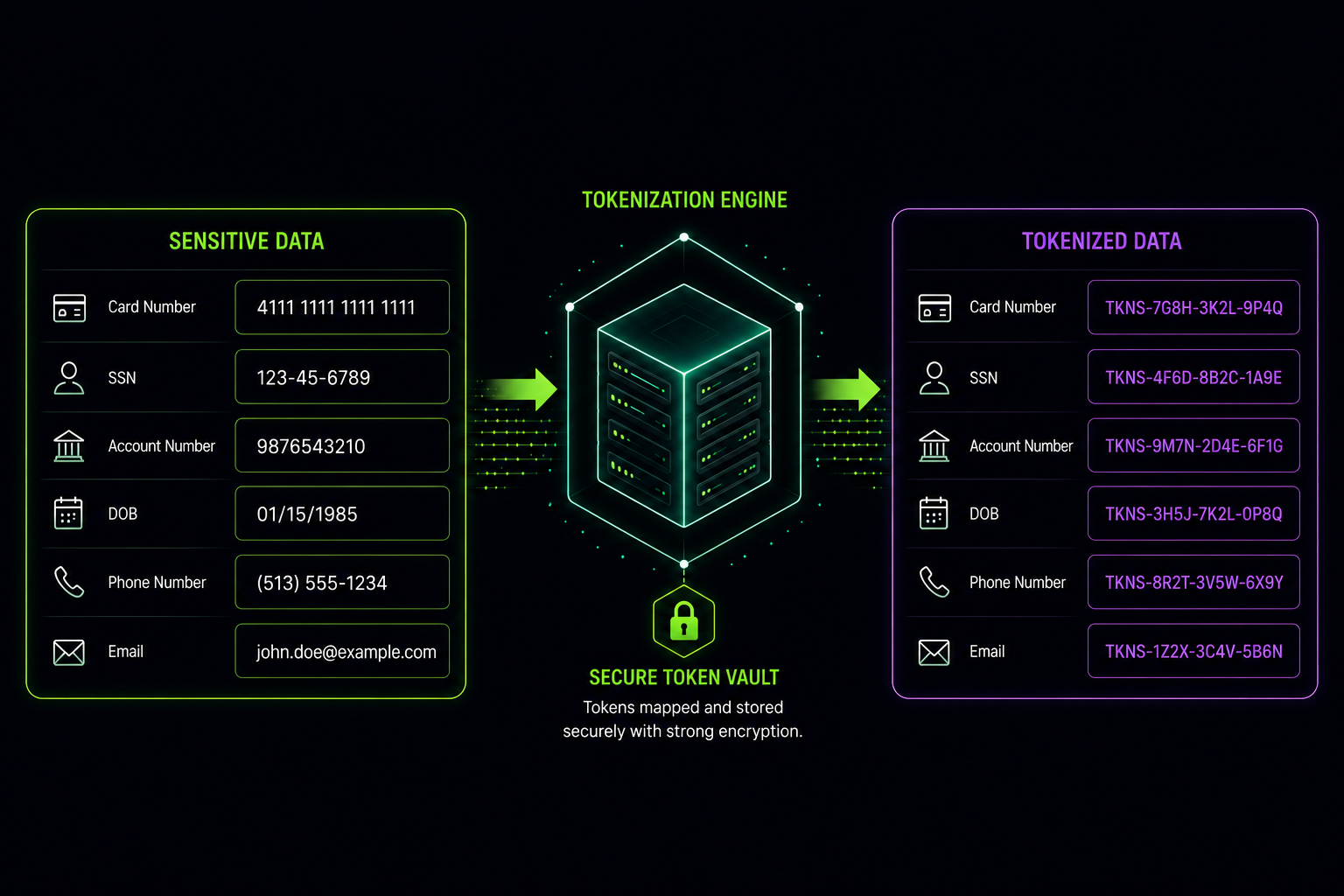
2. Tokenization (and Application Layer Encryption) - Replaces sensitive values with non-sensitive ones
Ideal for PCI, payment processing and regulated structured data.
Designed for:
✔ Legacy applications – SDKs, Client Libraries, Code Changes
✔ Often Vault based – Token Mapping Tables within a dynamic database
✔ Cryptographic or Non-Cryptographic
✔ Unaware of Context – Driven largely by pre-wired application logic
✔ Complex, Time-Consuming, Expensive, and Invasive – Years of application redesign & 10s of million of dollars of investments (both CAPEX & OPEX)
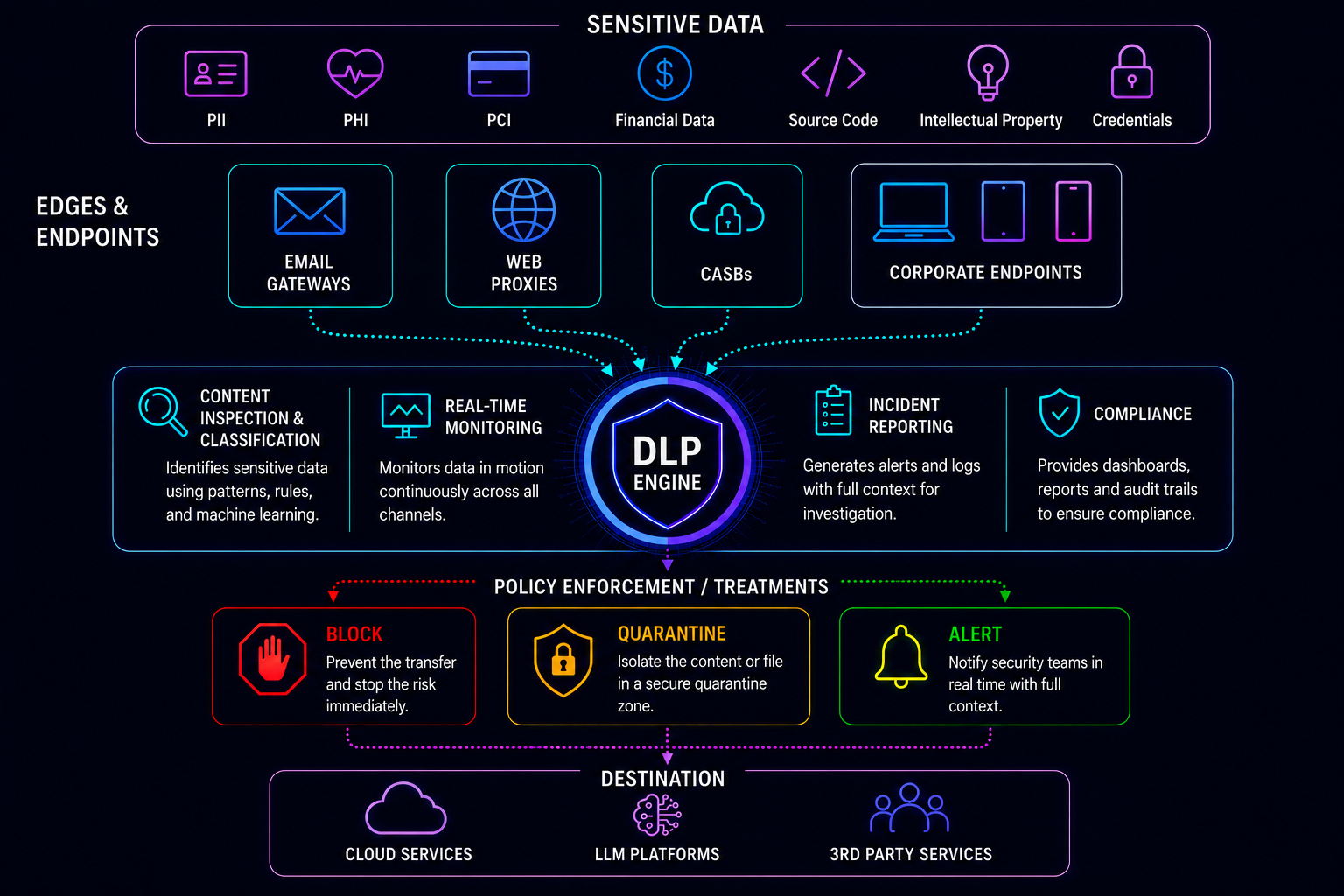
3. DLP (Data Loss Prevention or Data Leakage Prevention)
Controls unauthorized data movement.
Monitors and blocks sensitive information leaving approved channels.
Operates at the edges and endpoints – Don’t typically extend into AI Assistant, Copilot, Agent and LLM Application workflow, and legacy application pipelines.
Ideal for:
✔ Cloud Uploads
✔ Endpoints
✔ File sharing
✔ Insider threats
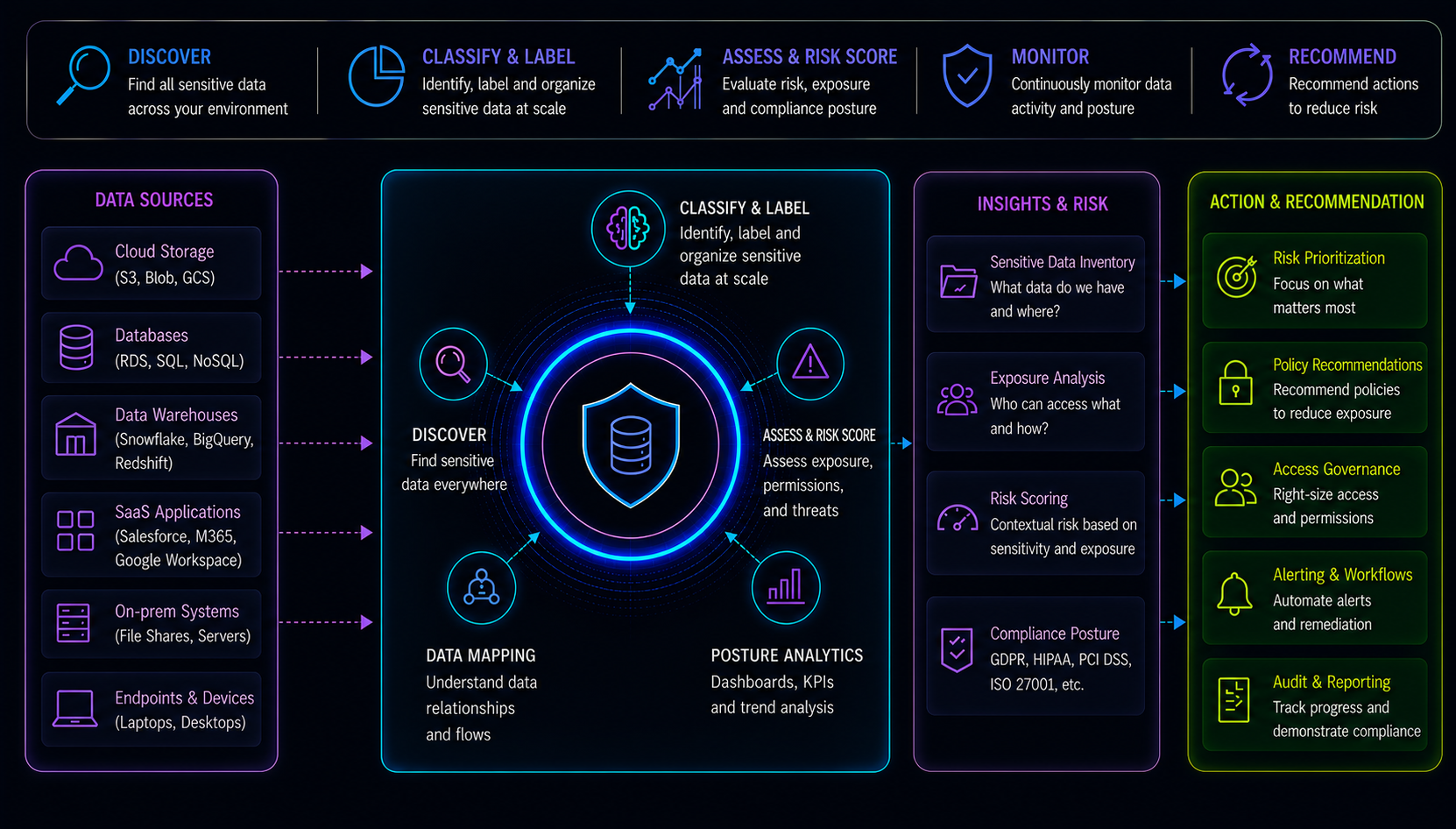
4. DSPM (Data Security Posture Management)
Discovers where sensitive data lives, and Classifies and Labels them.
Provides visibility into data stores, exposure risks, and compliance posture.
Point-in-Time Data at Rest Inventory – Doesn’t extend visibility of data in motion.
Ideal for:
✔ Data discovery ✔ Classification ✔ Risk prioritization ✔ Governance Could provide a foundation for automatic risk remediation through data-centric protection.Check out the Privaclave page on Go Beyond DSPM.
And last, but certainly not least, is Identity & Access Management (IAM)
A common misconception is that IAM also protects sensitive data. It doesn’t.
IAM authenticates users, applications, service accounts, and AI agents, then authorizes access to enterprise resources using mechanisms such as RBAC, ABAC, and PBAC.
Once access is granted, however, IAM understands who is accessing what resource, but it does not understand why the data is being accessed, whether all of the requested data should be exposed, or whether the request aligns with business context and intent.
As organizations increasingly adopt AI assistants, copilots, APIs, and autonomous agents, these decisions become more important than ever.
In the AI era, identity alone is no longer enough – because “Identity ≠ Intent“.
The Missing Layer for the AI Era
Privaclave™
Runtime Data Insights & Protection (RDIP)
Privaclave™ Runtime Data Insights & Protection (RDIP)
Encryption, Tokenization, DLP, DSPM, and IAM are foundational to modern data security. Together, they protect data at rest, in transit, govern access, control data movement, and improve enterprise-wide visibility.
As organizations embrace AI assistants, copilots, APIs, MCP servers, autonomous agents, and intelligent applications, they need an additional layer of protection that operates automatically, frictionlessly, and at runtime.
Privaclave™ Runtime Data Insights & Protection (RDIP) complements and extends your existing security investments by delivering automated, frictionless, context-aware runtime protection without requiring application changes, SDKs, agents, or plugins, enabling organizations to elevate their data security posture while confidently accelerating AI adoption.